Remote Data Entry Positions: The Ultimate Guide to Flexible Work-from-Home Opportunities
Unlock a Career in Remote Data Entry and Achieve Flexibility, Stability, and Growth

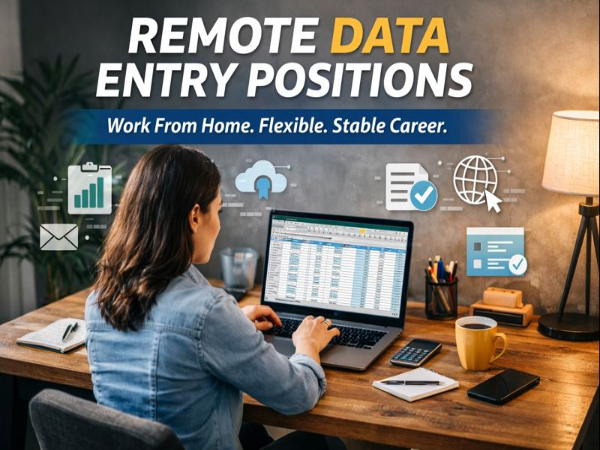
Remote data entry positions allow individuals to work from the comfort of their homes while accurately managing, organizing, and updating vital data for businesses. These roles are perfect for detail-oriented and disciplined professionals seeking flexible work schedules, reduced commuting time, and a better work-life balance. As businesses increasingly rely on digital systems, remote data entry has become essential for maintaining data integrity and operational efficiency, making it a highly sought-after career option for anyone aiming to work online with legitimacy and stability.
Introduction to Remote Data Entry Positions
Remote data entry positions have gained immense popularity in recent years due to the growing trend of digital transformation. Companies of all sizes rely heavily on accurate and organized data to make business decisions, track operations, and maintain customer records. Remote data entry allows businesses to outsource essential data management tasks while enabling individuals to work from home. These positions can vary in scope, from basic typing tasks to complex database management, but the core responsibility remains consistent: ensuring data accuracy and completeness.
Unlike traditional office-based roles, remote data entry positions remove geographic barriers, allowing individuals from different regions to contribute effectively. This shift has created opportunities for people who seek flexible schedules, part-time work, or additional income streams while balancing personal commitments.
Benefits of Remote Data Entry Jobs
Remote data entry positions offer numerous benefits that make them appealing to a wide range of professionals:
Flexibility: You can set your own work hours, which allows you to balance personal life and professional obligations.
Work-from-home convenience: There is no need to commute, saving time and money.
Skill development: These roles often enhance computer literacy, organizational skills, and attention to detail.
Accessibility: Many positions require minimal experience, making them suitable for beginners entering the online workforce.
Stable income potential: With consistent work, remote data entry can provide a steady and legitimate source of income.
The combination of flexibility and skill development makes remote data entry an ideal entry point for individuals looking to explore online employment opportunities.
Key Skills Required for Success
Success in remote data entry positions requires a blend of technical and soft skills. Key skills include:
Typing speed and accuracy: Fast and precise typing is essential.
Attention to detail: Ensuring data accuracy prevents costly mistakes.
Computer literacy: Knowledge of Microsoft Office, Google Sheets, and database management software is highly beneficial.
Time management: Remote work demands self-discipline and effective scheduling.
Communication: Even though the work is remote, clear communication with supervisors or clients is vital.
Developing these skills increases the chances of obtaining higher-paying and more stable data entry roles.
Types of Remote Data Entry Positions
Remote data entry positions come in various forms, each requiring specific skills and offering unique benefits:
Basic Data Entry: Inputting information from paper or digital sources into spreadsheets or databases.
Transcription: Converting audio or video content into text.
Data Cleansing: Identifying and correcting errors in existing data.
Data Conversion: Transforming data from one format to another, such as PDF to Excel.
Virtual Assistant Roles: Some positions combine data entry with administrative tasks like scheduling and correspondence.
Understanding the types of positions available helps candidates choose roles that match their skills and interests.
How to Find Legitimate Remote Data Entry Jobs
Finding legitimate remote data entry positions requires careful research and persistence:
Use trusted job boards: Platforms dedicated to remote work often verify listings.
Check company websites: Established companies sometimes post remote data entry openings directly.
Network professionally: Join online communities, forums, and social media groups related to remote work.
Tailor your resume: Highlight relevant skills such as typing speed, software proficiency, and attention to detail.
Consistency and diligence in applying for positions increases the likelihood of landing a legitimate role.
Avoiding Scams and Fake Opportunities
Unfortunately, remote data entry positions attract scams. Signs to watch for include:
Requests for upfront payments or “training fees.”
Promises of unusually high pay for minimal work.
Lack of company information or unverifiable contacts.
Pressure to accept the job immediately without proper documentation.
Always verify the employer, request a formal contract, and ensure the job aligns with standard compensation rates for the industry.
Tools and Software Commonly Used
Remote data entry positions often require proficiency in certain tools:
Microsoft Excel / Google Sheets: For spreadsheets and basic database management.
Database software: Examples include SQL, Salesforce, or custom CRM systems.
Typing and productivity tools: Time trackers and data entry automation software.
Communication platforms: Email, chat apps, and project management tools.
Familiarity with these tools improves efficiency and employability in remote roles.
Tips for Increasing Efficiency and Accuracy
Productivity in remote data entry positions can be significantly enhanced by:
Using keyboard shortcuts to save time.
Double-checking entries for accuracy.
Breaking work into manageable intervals to maintain focus.
Maintaining an organized digital workspace.
Regularly backing up data to avoid loss.
Consistency in applying these practices reduces errors and increases overall performance.
Career Growth and Future Opportunities
Remote data entry positions can serve as stepping stones for career growth:
Advanced administrative roles: Virtual assistant, office manager, or data coordinator.
Data analysis and reporting: Transitioning into analytics roles by leveraging data-handling skills.
Specialized industries: Healthcare, finance, and e-commerce offer higher-paying, niche data roles.
Developing skills and gaining experience in remote data entry opens doors to long-term online careers.
Conclusion
Remote data entry positions provide an accessible, flexible, and legitimate avenue for individuals seeking work-from-home opportunities. With businesses relying heavily on digital data, these roles are increasingly critical for operational success. By developing the right skills, understanding the types of positions available, and avoiding scams, anyone can build a stable and rewarding career in remote data entry. Whether you are seeking part-time work, supplemental income, or a full-time online career, remote data entry offers a path to flexibility, growth, and long-term stability.