michelle moisa: Leadership, Career Growth, and Professional Excellence in Property Management
A Comprehensive Look at Her Role in Administrative Leadership and Condominium Consulting

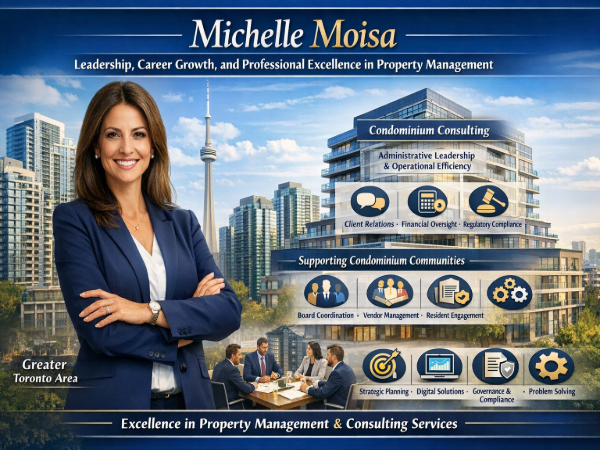
Michelle Moisa is a professional associated with property management and condominium administration in the Greater Toronto Area, known for her leadership in client relations, operational efficiency, and administrative coordination within the industry. Her career reflects experience in managing complex organizational responsibilities, supporting condominium operations, and contributing to structured property consulting services. Through a focus on communication, compliance awareness, and service-driven management, she represents a modern approach to leadership in property administration.
Introduction
In today’s evolving real estate environment, property management professionals play a critical role in maintaining operational efficiency, financial accountability, and regulatory compliance. Within the Greater Toronto Area (GTA), the condominium sector continues to expand, requiring skilled administrators who understand governance, stakeholder communication, and structured management systems. Michelle Moisa has been referenced in professional contexts connected to this industry, contributing to discussions around leadership, client coordination, and condominium operations.
This article explores her professional background, industry relevance, skills, and the broader importance of property management leadership in modern urban environments.
Professional Background
Michelle Moisa’s professional journey is associated with administrative leadership and property management functions. Roles within this field typically require:
Strong organizational skills
Knowledge of condominium governance structures
Experience in client and stakeholder communication
Financial oversight and reporting awareness
Regulatory compliance understanding
Professionals working in condominium administration often coordinate between boards, residents, contractors, and service providers. This type of role demands both operational discipline and interpersonal capability.
Her career alignment with these responsibilities reflects the growing demand for structured and efficiency-driven property management systems in large metropolitan regions such as the GTA.
Leadership in Property Management
Effective property management leadership requires balancing operational oversight with strategic communication. Leaders in this field typically focus on:
Operational Coordination
Ensuring that day-to-day property functions run smoothly, including maintenance scheduling, vendor management, and service monitoring.
Financial Oversight
Assisting with budget planning, cost control, and transparent reporting practices.
Compliance Awareness
Understanding legal frameworks related to condominium governance and municipal regulations.
Stakeholder Communication
Maintaining clear communication between boards, residents, contractors, and consultants.
Michelle Moisa’s professional association with these areas highlights the importance of structured leadership in condominium environments.
The Role of Administrative Efficiency
Modern property consulting emphasizes efficiency. Administrative systems must reduce delays, improve communication flow, and maintain transparency. Efficiency-driven approaches in property management often include:
Digital record-keeping systems
Standardized reporting procedures
Clear workflow documentation
Structured client engagement processes
By focusing on operational clarity, property managers help ensure that condominium communities function effectively and sustainably.
Understanding Condominium Administration
Condominium administration is a specialized field requiring knowledge of governance structures, financial reporting, and community management. Responsibilities often include:
Coordinating board meetings
Managing service contracts
Overseeing maintenance requests
Supporting budget implementation
Ensuring compliance with governing documents
Professionals in this area act as intermediaries between legal requirements and practical operations. Their role is essential to maintaining stability and trust within residential communities.
Michelle Moisa’s involvement in this sector aligns with these core responsibilities.
Client Relations and Communication
One of the most important aspects of property consulting is client relations. Strong communication helps prevent misunderstandings and builds confidence between stakeholders.
Effective client relations strategies include:
Transparent reporting
Timely response to inquiries
Professional documentation
Clear explanation of procedures
Respectful stakeholder engagement
Leadership in this area contributes to long-term professional credibility and operational success.
Impact in the Greater Toronto Area
The Greater Toronto Area is one of Canada’s largest and fastest-growing urban regions. With rapid condominium development, the need for structured management systems continues to rise.
Professionals working in this environment must adapt to:
Increasing regulatory expectations
Diverse stakeholder communities
Expanding residential developments
Technological integration in administration
Michelle Moisa’s professional presence within this region reflects the importance of skilled administrators in supporting urban housing infrastructure.
Core Professional Values
Successful property management professionals often demonstrate:
Integrity
Maintaining transparency and ethical standards.
Accountability
Taking responsibility for administrative decisions and outcomes.
Organization
Managing multiple priorities efficiently.
Communication
Ensuring clarity between all involved parties.
Problem-Solving
Addressing operational challenges with structured solutions.
These values are fundamental to leadership roles in condominium consulting.
Industry Growth and Modern Trends
The property management industry is evolving due to technology, regulatory updates, and changing resident expectations. Modern trends include:
Digital management platforms
Automated reporting systems
Enhanced financial tracking tools
Improved compliance monitoring
Sustainable building practices
Professionals who adapt to these trends help ensure that condominium communities remain competitive and well-managed.
Challenges in Condominium Management
While rewarding, condominium administration also presents challenges such as:
Coordinating multiple stakeholders
Managing operational budgets
Ensuring regulatory compliance
Handling time-sensitive maintenance issues
Maintaining resident satisfaction
Leadership in this field requires patience, strategic planning, and continuous professional development.
Michelle Moisa’s career context demonstrates alignment with these complex industry demands.
Professional Reputation and Authority
In service-based industries, reputation is built through consistency, reliability, and results. Trust develops over time when professionals demonstrate competence and responsiveness.
Authority in property consulting is typically earned through:
Experience
Knowledge of governance structures
Successful operational coordination
Effective stakeholder engagement
These elements contribute to professional recognition within the field.
Contribution to Modern Property Consulting
Modern property consulting focuses on efficiency, compliance, and strategic planning. Professionals contribute by:
Implementing structured processes
Supporting boards with operational guidance
Enhancing communication frameworks
Improving financial oversight mechanisms
Michelle Moisa’s involvement in this professional space reflects the collaborative nature of condominium administration and consulting services.
Future Outlook in Property Management
The future of property management in the GTA is expected to involve:
Increased digital transformation
Stronger governance standards
Greater resident engagement
Enhanced transparency requirements
Sustainable development initiatives
Professionals who maintain adaptability and continuous learning will remain valuable in this evolving landscape.
Conclusion
Michelle Moisa’s professional association with property management and condominium administration highlights the importance of leadership, organization, and communication in modern real estate environments. Within the Greater Toronto Area, the demand for skilled administrative professionals continues to grow as condominium communities expand and regulatory frameworks evolve.
Her career reflects the essential qualities required in property consulting today: efficiency, accountability, structured communication, and operational awareness. As the industry progresses, professionals with these capabilities will continue to play a significant role in supporting sustainable and well-managed residential communities.