Leasing Revolution: How Subscription-Based Tech Is Transforming Device Ownership
The Future of Technology Access Is Here

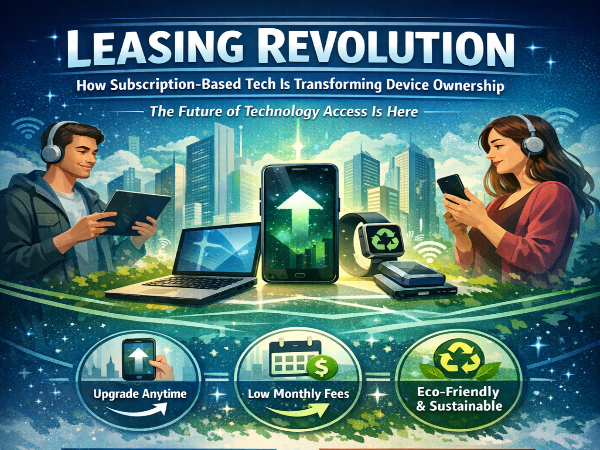
The Leasing Revolution refers to the shift from traditional device ownership to subscription-based access models, allowing consumers to use the latest phones, laptops, tablets, and other gadgets by paying affordable monthly fees instead of large upfront costs. This model provides flexibility, easier upgrades, reduced financial pressure, and often supports sustainability by encouraging reuse and refurbishment of devices. As technology evolves rapidly, leasing services are becoming a practical alternative for individuals and businesses who want constant access to modern devices without long-term commitment.
Introduction to the Leasing Revolution
Technology changes faster than ever before. Every year, new smartphones, faster laptops, smarter tablets, and advanced gadgets enter the market. For many consumers, keeping up with these updates can be expensive and overwhelming. The traditional approach—buying devices outright—requires a large upfront payment and often leads to long replacement cycles.
This is where the Leasing Revolution begins.
Instead of owning devices, consumers now have the option to access them through subscription-based leasing models. This approach is reshaping how people think about technology. Ownership is no longer the only path. Access, flexibility, and affordability are becoming the new priorities.
The Leasing Revolution is not just a trend—it represents a fundamental change in consumer behavior and business strategy.
What Is the Leasing Revolution?
The Leasing Revolution is the transformation of traditional purchasing models into flexible subscription systems. Rather than paying full price for a device, users pay a predictable monthly fee to use it for a defined period.
This model is widely used across industries, including:
Smartphones
Laptops and computers
Tablets and wearable devices
Gaming consoles
Home electronics
Business technology equipment
The goal is simple: make technology more accessible, affordable, and sustainable.
Instead of investing a large amount upfront, users spread the cost over time, making budgeting easier and reducing financial pressure.
How Technology Leasing Works
Although leasing services may differ slightly, most follow a similar structure:
Choose Your Device
Customers select the technology they want from available options.
Select a Plan
Leasing terms may include:
Monthly rolling plans
12-month agreements
24-month agreements
Longer fixed terms
Shorter terms offer flexibility, while longer terms may reduce monthly payments.
Pay Monthly
Instead of paying the full retail price, customers pay a fixed subscription fee each month.
End-of-Term Options
At the end of the lease, users usually can:
Upgrade to a newer model
Continue leasing the same device
Return the device
In some cases, purchase it
This flexibility is one of the strongest advantages of the Leasing Revolution.
Why the Leasing Revolution Is Growing
Several key factors are driving this shift.
Rapid Technology Updates
Devices improve quickly. New features, better cameras, faster processors, and enhanced security are released frequently. Leasing makes upgrades easier.
Financial Flexibility
Not everyone wants to spend a large amount at once. Leasing spreads costs into manageable monthly payments.
Changing Consumer Mindset
Modern consumers prefer access over ownership. Subscription services are now common in entertainment, transportation, and software. Technology leasing fits this trend.
Business Efficiency
Companies can equip employees with devices without large capital investments. This improves cash flow and operational flexibility.
Benefits of Technology Leasing
Lower Upfront Costs
Leasing often requires little or no large initial payment.
Predictable Monthly Expenses
Fixed payments make financial planning easier for individuals and businesses.
Easy Upgrades
Users can switch to the latest device without selling old equipment.
Reduced Hassle
No need to resell devices when upgrading.
Access to Premium Devices
High-end technology becomes more accessible.
Sustainability and the Circular Economy
One major reason behind the Leasing Revolution is environmental responsibility.
Traditional ownership models can lead to:
Electronic waste
Underused devices
Short product lifecycles
Leasing companies often:
Refurbish returned devices
Reuse hardware
Extend product lifespans
Reduce landfill waste
This supports a circular economy, where products are reused rather than discarded.
By encouraging refurbishment and responsible recycling, leasing models can reduce environmental impact while maintaining access to modern technology.
Leasing vs Traditional Buying
Understanding the differences helps consumers make informed decisions.
Buying a Device
Full ownership
Large upfront payment
Responsible for resale value
Upgrade depends on personal budget
Leasing a Device
Monthly payments
Access without ownership
Easier upgrades
Return or switch options available
Which option is better depends on personal priorities:
If long-term ownership matters, buying may be suitable.
If flexibility and upgrades matter, leasing may be more practical.
Is Leasing More Expensive?
This depends on usage patterns.
Leasing may cost more over a very long period compared to buying and keeping a device for many years. However, leasing offers benefits such as convenience, upgrades, and lower upfront costs.
For users who frequently upgrade devices, leasing can be financially sensible.
For users who keep devices for extended periods, purchasing might be more cost-effective.
The Leasing Revolution is not about replacing ownership entirely—it is about offering choice.
Leasing for Businesses
Businesses are adopting leasing models for several reasons:
Improved Cash Flow
Avoid large equipment purchases.
Scalable Solutions
Easily add or remove devices as teams grow.
Simplified Device Management
Centralized tracking and replacement.
Technology Consistency
Employees can use up-to-date hardware, improving productivity.
For startups and growing companies, leasing can be a strategic advantage.
Consumer Trends Supporting the Leasing Revolution
Several global trends align with subscription-based technology access:
Growth of digital services
Increased focus on sustainability
Demand for flexibility
Preference for lower financial risk
Rapid innovation cycles
These trends show that consumers value convenience and adaptability.
Technology leasing fits naturally into this modern lifestyle.
Potential Considerations Before Choosing Leasing
While leasing offers many benefits, consumers should review:
Contract Terms
Understand the length and conditions of the agreement.
Device Condition Policies
Some plans may include rules about wear and tear.
Total Cost Over Time
Compare long-term leasing costs with purchase costs.
Upgrade Flexibility
Check how and when upgrades are allowed.
Being informed ensures the best experience.
The Future of the Leasing Revolution
The Leasing Revolution is expected to expand as:
Devices become more expensive
Technology advances more quickly
Consumers prioritize flexibility
Sustainability becomes more important
Future developments may include:
More personalized subscription models
Integration with smart services
Enhanced upgrade automation
Broader device categories
The shift toward access-based consumption is likely to continue growing across industries.
Why the Leasing Revolution Matters
This movement is more than a payment model. It represents a cultural shift.
Ownership used to define value. Now, access defines convenience.
Consumers want:
Freedom to upgrade
Financial flexibility
Reduced commitment
Sustainable options
Leasing provides all of these benefits in one model.
The Leasing Revolution is redefining how people interact with technology.
Who Should Consider Technology Leasing?
Leasing may be ideal for:
Students who need affordable devices
Professionals who upgrade frequently
Businesses scaling operations
Consumers who prefer predictable expenses
Environmentally conscious users
It may be less suitable for those who:
-
Prefer long-term ownership
-
Use devices for many years without upgrading
Conclusion
The Leasing Revolution is transforming the technology industry by shifting the focus from ownership to access. Subscription-based models make it easier for consumers and businesses to stay current with the latest devices without large upfront investments.
With benefits such as flexibility, affordability, sustainability, and upgrade convenience, leasing is becoming a powerful alternative to traditional purchasing. As technology continues to evolve rapidly, the Leasing Revolution is likely to play an even greater role in shaping how people experience and use digital devices.
Whether you are an individual looking for the latest smartphone or a business equipping a team, leasing offers a modern solution aligned with today’s fast-paced world.
The future of technology access is flexible, sustainable, and subscription-driven—and that future is already here.