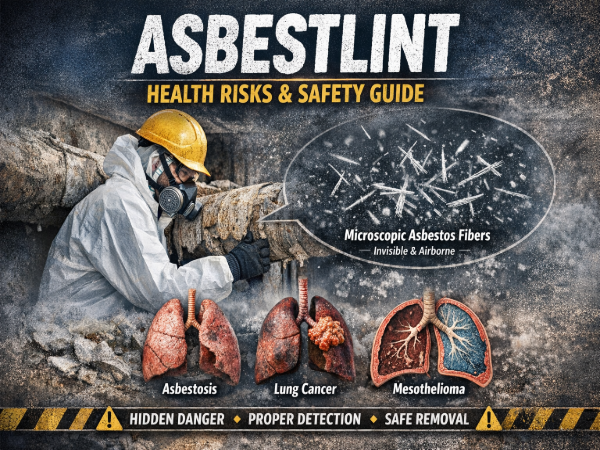
Asbestlint refers to microscopic, dust-like asbestos fibers that become airborne when asbestos-containing materials deteriorate or are disturbed. These nearly invisible fibers can remain suspended in the air and pose serious health risks, including asbestosis, lung cancer, and mesothelioma. Asbestlint is commonly found in older buildings, industrial facilities, and construction sites, making professional inspection, proper handling, and safe removal essential to protect human health.
Table of Contents
ToggleIntroduction to Asbestlint
Asbestlint is a term formed by combining “asbestos” and “lint,” describing extremely fine, lightweight fibers that can float in the air when asbestos materials are damaged or aged. While asbestos was once widely used in construction due to its heat resistance and durability, it is now recognized as a hazardous material.
When asbestos-containing products begin to break down, tiny fibers are released. These fibers are so small that they are often invisible to the human eye. This airborne dust-like material is what many people refer to as asbestlint.
Understanding asbestlint is important for homeowners, builders, renovation workers, and anyone who may encounter older structures. Awareness helps prevent exposure and reduces health risks.
What Is Asbestlint?
Asbestlint describes loose or airborne asbestos fibers that resemble lint or fine dust. These fibers can originate from materials such as insulation, pipe wrapping, ceiling coatings, flooring products, and roofing materials that contain asbestos.
Over time, exposure to weather, aging, vibration, drilling, or demolition can cause these materials to degrade. When disturbed, they release microscopic fibers into the air. Once airborne, these fibers can travel through ventilation systems, settle on surfaces, or remain suspended for extended periods.
Unlike ordinary dust, asbestlint is dangerous because it contains fibrous particles that do not break down in the human body.
Why Asbestlint Is Dangerous
The primary risk of asbestlint comes from inhalation. When these microscopic fibers are breathed in, they can travel deep into the lungs. The body cannot easily remove them, and over time, this can lead to serious health conditions.
Major Health Risks Include:
Asbestosis
A chronic lung disease caused by scarring of lung tissue. It can cause breathing difficulties and reduced lung function.
Lung Cancer
Long-term exposure increases the risk of developing lung cancer, especially in individuals who smoke.
Mesothelioma
A rare but aggressive cancer affecting the lining of the lungs or abdomen. It is strongly linked to asbestos exposure.
These conditions may take many years—sometimes decades—to appear after exposure. This long delay makes early awareness extremely important.
Where Asbestlint Is Commonly Found
Asbestlint is most often associated with older buildings constructed before regulations limited asbestos use. It may be found in:
Residential homes built decades ago
Commercial buildings
Schools and hospitals
Factories and industrial facilities
Warehouses
Shipyards
Power plants
Common materials that may release asbestlint include:
Pipe insulation
Ceiling tiles
Textured coatings
Floor tiles
Roofing sheets
Cement products
Old adhesive materials
Renovation, demolition, or even simple repairs can disturb these materials and release fibers.
How Asbestlint Becomes Airborne
Asbestlint forms when asbestos-containing materials deteriorate or are physically disturbed. Several activities can trigger fiber release:
Construction Work
Drilling, cutting, sanding, or removing old materials.
Renovations
Kitchen, bathroom, or home remodeling in older properties.
Natural Wear and Tear
Aging materials may crumble over time.
Damage
Water leaks, fire damage, or structural impacts.
Once released, fibers can remain suspended in the air, especially in enclosed spaces with poor ventilation.
How Long Can Asbestlint Stay in the Air?
Asbestos fibers are extremely light. In still air, they may stay suspended for hours. Air movement can spread them further within a building.
This is why even small disturbances in contaminated areas can lead to widespread exposure if proper safety measures are not followed.
Can You See Asbestlint?
No. Asbestlint is made of microscopic fibers. It cannot be reliably identified by sight alone.
Because asbestos fibers are invisible, professional testing is the only safe way to confirm whether a material contains asbestos. Attempting to identify it without proper equipment can be dangerous.
Testing for Asbestlint
If asbestos is suspected in a building, certified professionals use specialized methods to test materials and air quality.
Common Testing Methods:
Material sampling
Laboratory analysis
Air monitoring
Environmental inspection
These tests help determine whether asbestos fibers are present and whether the area is safe.
It is strongly recommended that only trained and licensed professionals handle testing procedures.
Safety Measures for Asbestlint
Preventing exposure is the most important step. If asbestos is suspected, follow these safety guidelines:
Do Not Disturb the Material
Avoid drilling, cutting, or touching damaged areas.
Avoid Sweeping or Vacuuming
Regular cleaning methods can spread fibers into the air.
Seal Off the Area
Limit access until a professional inspection is completed.
Hire Certified Experts
Only trained asbestos removal specialists should handle contaminated materials.
Proper containment and disposal procedures are essential to prevent further spread.
Professional Removal Process
When asbestos is confirmed, removal must follow strict regulations. Professionals use protective equipment and specialized techniques to reduce fiber release.
The process typically includes:
Sealing the work area
Using protective clothing and respirators
Wetting materials to minimize dust
Careful removal
Secure packaging and disposal
Post-removal air testing
These steps help ensure the environment is safe after cleanup.
Prevention in Older Buildings
If you own or manage an older property, consider the following preventive measures:
Schedule regular inspections
Avoid unnecessary renovations without testing
Keep damaged materials sealed
Educate occupants about asbestos awareness
Awareness reduces accidental disturbance and minimizes exposure risks.
Common Myths About Asbestlint
Myth 1: You Can See It Easily
False. Asbestos fibers are microscopic.
Myth 2: Small Amounts Are Safe
There is no known safe level of exposure.
Myth 3: Only Workers Are Affected
While workers face higher risk, homeowners can also be exposed during renovations.
Myth 4: It Only Affects Old Factories
Asbestos was used in many types of buildings, including homes and schools.
Understanding the facts helps prevent misinformation.
Who Is Most at Risk?
People who may face higher exposure include:
Construction workers
Renovation contractors
Maintenance staff
Demolition crews
Industrial workers
Residents of older buildings undergoing repair
However, anyone in a contaminated environment can be exposed.
Environmental Impact of Asbestlint
Asbestos fibers can also affect the surrounding environment if not properly disposed of. Improper handling can lead to contamination of soil and air.
Responsible disposal methods are essential to prevent environmental spread.
Importance of Awareness
Education about asbestlint helps communities:
Recognize potential risks
Take preventive action
Reduce accidental exposure
Protect future generations
Public awareness plays a key role in minimizing asbestos-related diseases.
Legal Regulations and Standards
Many countries have strict regulations controlling the use, handling, and disposal of asbestos materials. These laws aim to protect workers and the public from exposure.
Compliance with safety standards is mandatory in renovation and demolition projects involving asbestos.
Long-Term Health Monitoring
Individuals who believe they may have been exposed to asbestos should consult healthcare professionals for guidance. Regular medical checkups can help detect early signs of respiratory issues.
Early detection improves management of potential health conditions.
Conclusion
Asbestlint refers to microscopic asbestos fibers that become airborne when asbestos-containing materials deteriorate or are disturbed. These fibers pose serious health risks, including asbestosis, lung cancer, and mesothelioma. Because asbestlint cannot be seen with the naked eye and may remain in the air for hours, proper awareness, testing, and professional removal are essential.
Older buildings and industrial facilities are most commonly associated with asbestos presence, making inspection and preventive action important. By understanding what asbestlint is, how it forms, and how to manage it safely, individuals and organizations can significantly reduce health risks and maintain safer environments.
Awareness, responsibility, and professional handling remain the most effective ways to protect human health from asbestos exposure.